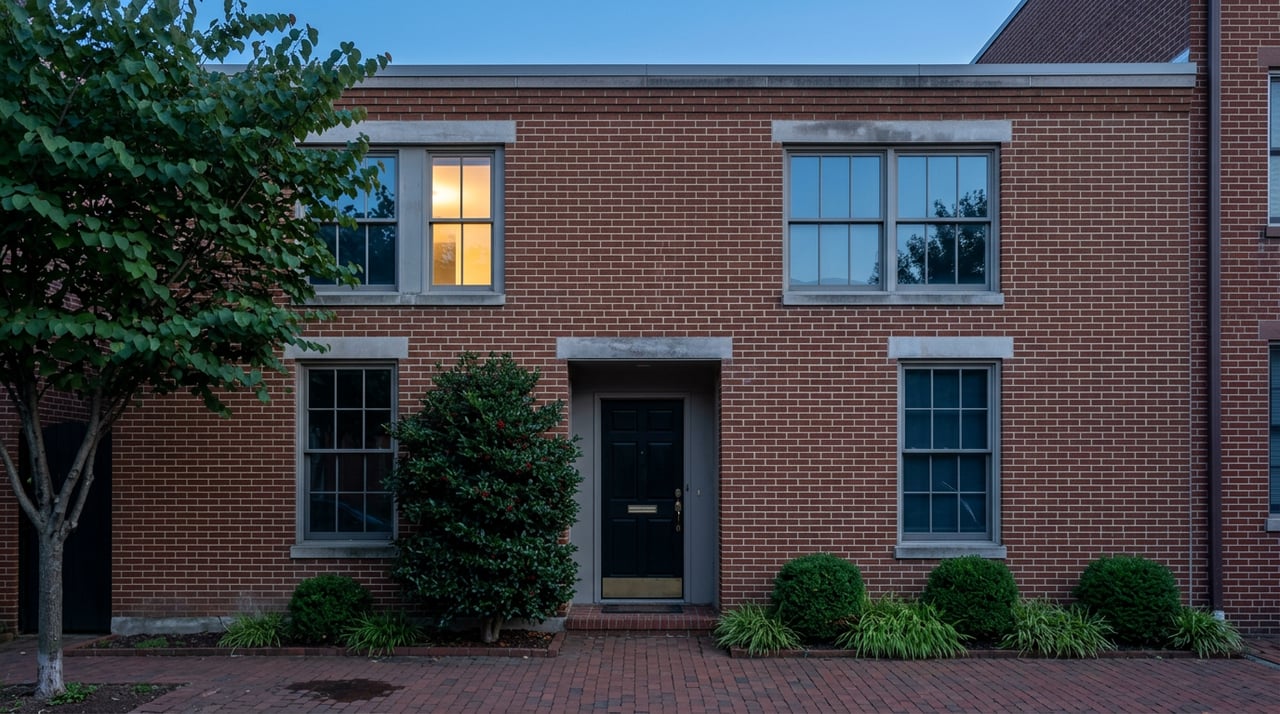
Trying to choose between a rowhouse and a condo in Washington, DC? You are not alone, and the decision is about much more than style. Your best option depends on how you want to balance price, monthly costs, maintenance, flexibility, and long-term control. If you are weighing both paths, this guide will help you compare the tradeoffs that matter most in today’s DC market. Let’s dive in.
Start With the DC Difference
In Washington, DC, “rowhouse” and “condo” do not always describe the same thing. A rowhouse refers to the building form, while a condo refers to the ownership structure. Under DC law, a condo owner has exclusive fee-simple ownership of the unit plus an undivided interest in the common elements of the property, as outlined in the District’s condominium code.
That matters because a home that looks like a classic DC rowhouse might still be legally a condominium. Before you compare options, make sure you know whether you are buying a fully separate property or a unit within a shared ownership structure.
Compare Price Points in DC
For many buyers, price is the first major dividing line. In the DC metro area, recent market data shows condos typically come in at a lower price point than attached homes and townhomes.
According to Bright MLS’s September 2025 DC metro report, condos had a median sold price of $379,000, while attached homes and townhomes had a median sold price of $590,990. That is a meaningful gap, especially if you are trying to keep your down payment, loan amount, and closing costs in check.
Citywide pricing also varies widely by area. Realtor.com’s January 2026 Washington, DC market overview reported a median listing price of $549,000, with neighborhood medians ranging from roughly $372,000 in Congress Heights to $1.895 million in Georgetown. In other words, location can affect your budget just as much as property type.
Look Beyond the Purchase Price
A lower sticker price does not always mean a lower monthly cost. This is where the condo versus rowhouse decision gets more nuanced.
DC’s residential real property tax rate is 0.85 per $100 of assessed value, and qualifying owner-occupants may benefit from the 2025 homestead deduction of $89,850. As a rough illustration, monthly property tax would be about $205 on a $379,000 condo and about $355 on a $590,990 attached home, assuming assessed value tracks purchase price.
That difference is real, but it is only one part of the budget. Condo and HOA dues are often a major monthly expense in DC. The U.S. Census Bureau reported that about half of homeowners in the District of Columbia who paid these fees spent more than $500 per month in 2024.
So while a condo may offer a lower entry price, the ongoing dues can narrow the monthly savings. A rowhouse often gives you more direct control over your property, but it also shifts more repair and upkeep costs onto you.
Understand Closing Cost Taxes
Your upfront costs can also change depending on price. In DC, both the deed recordation tax and deed transfer tax apply to residential purchases.
For transfers under $400,000, each tax is 1.1%. For transfers over $400,000, each rises to 1.45%, according to the DC Office of the Chief Financial Officer. That means crossing the $400,000 mark can noticeably increase your transaction costs at closing.
For some buyers, this makes condos especially appealing as an entry point. For others, paying more upfront for an attached home may still make sense if autonomy and long-term control are top priorities.
Condo Living Means Shared Systems
One of the biggest advantages of condo ownership is convenience. Condo fees usually help cover common areas, structural features, shared services, and in some buildings, amenities. The Census Bureau’s overview of condo and HOA fees highlights that these payments often support roofs, hallways, and other shared elements that individual owners do not manage alone.
DC law also requires condo bylaws to address upkeep of common elements, collection of shared expenses, management, and restrictions designed to prevent unreasonable interference between owners, as described in DC Code section 42-2014. In practical terms, you are trading some independence for a more structured maintenance system.
If you prefer a more hands-off ownership experience, that can be a strong plus. If you want full say over how things are handled, the condo model may feel limiting.
Rowhouses Offer More Control
A rowhouse often feels more like traditional homeownership. You usually have more control over maintenance decisions, improvement timing, and day-to-day use of the property.
That greater autonomy can be a major benefit if you want flexibility and a more house-like ownership experience. It can also mean more responsibility, since repairs, exterior maintenance, and system replacements may fall directly on you unless there is a separate HOA or shared maintenance arrangement.
For buyers who value control, that responsibility may be worth it. For buyers with limited time or those who want more predictable shared upkeep, a condo can feel easier to manage.
Rules and Flexibility Matter
When you buy a condo, you are not just buying the unit. You are also buying into the building’s bylaws, insurance framework, and operating rules.
That can affect your long-term options. DC law allows associations to reasonably restrict leasing in some cases, which means your future ability to rent out the property may depend on the building’s rules, as reflected in District condominium law.
Insurance is another key point. The DC Department of Insurance, Securities and Banking says condo owners are generally responsible for the interior walls and floor of the unit, and some associations may assess owners for certain damage. Before you buy, it is smart to review the bylaws, insurance requirements, and any history of special assessments.
Historic Rules Can Affect Rowhouses
Rowhouses usually offer more interior freedom, but exterior changes may come with another layer of review in Washington, DC. This is especially important if the property is in a historic district or designated as historic.
The DC Office of Planning says preservation review is required when a building permit is needed for work that affects the exterior appearance of a historic property. Major additions, front porch enclosures, visible roof decks, new or altered front openings, visible garages, and significant facade changes may require review by the Historic Preservation Review Board.
If you are dreaming about exterior renovations, a rowhouse may still be the right fit, but you should go in with clear expectations. In some cases, approvals can add time, cost, and design constraints to your plans.
Resale Conditions Are Different
Your future resale experience may not look the same for both property types. Current metro data suggests condos have softer liquidity than attached homes and townhomes.
The same Bright MLS report showed that condos had longer median days on market and more months of supply. For buyers today, that can create more negotiating room in the condo segment. But later on, it can also mean your resale may be more sensitive to dues, assessments, rental restrictions, and the building’s reputation.
Attached homes and rowhouse-style properties may have stronger market positioning in some scenarios, but that does not automatically make them the better fit. The right choice depends on your timeline, budget, and tolerance for responsibility.
Which Option Fits You Best?
If you want a lower entry price and a more managed ownership experience, a condo may be the better match. If you want more autonomy and are comfortable taking on more maintenance exposure, a rowhouse may align better with your goals.
Here is a simple way to think about it:
| If you prioritize... | A condo may fit better | A rowhouse may fit better |
|---|---|---|
| Lower purchase price | Yes | Less often |
| Shared maintenance | Yes | Usually no |
| More autonomy | Less often | Yes |
| Predictable exterior upkeep structure | Often | Less often |
| Fewer building rules | Less often | Often |
| Flexibility for future changes | Depends on bylaws | Often stronger, but exterior limits may apply in historic cases |
In DC, the best decision usually comes down to your lifestyle and risk comfort more than the label on the listing. A condo often optimizes convenience and entry price, while a rowhouse often optimizes control and long-term flexibility.
If you want help comparing real options in Washington, DC, ONE Residential can guide you through the numbers, documents, and neighborhood-specific factors so you can move forward with confidence.
FAQs
What is the difference between a rowhouse and a condo in Washington, DC?
- A rowhouse describes the building style, while a condo describes the ownership structure. In DC, a rowhouse-style home can still legally be a condominium.
Are condos cheaper than rowhouses in the Washington, DC market?
- Recent DC metro data shows condos had a lower median sold price than attached homes and townhomes, though the exact gap depends on location and condition.
Do condos in Washington, DC usually have high monthly fees?
- They can. Census data found that about half of homeowners in DC who paid condo or HOA fees spent more than $500 per month in 2024.
Are rowhouses in Washington, DC easier to renovate than condos?
- Rowhouses often offer more interior control, but exterior work on historic properties may require preservation review and added approvals.
Can a Washington, DC condo owner rent out the unit later?
- Sometimes, but it depends on the building’s rules. DC law allows associations to reasonably restrict leasing in some cases.
Which is better for resale in Washington, DC: a condo or a rowhouse?
- It depends on the property and location, but recent regional data suggests condos have had longer days on market and more supply than attached homes and townhomes.