If you are thinking about buying a small rental property in Maryland’s DC corridor, one question matters fast: will the numbers work after you account for local rules? In this part of the DMV, a promising listing can look very different once you factor in rent stabilization, licensing, lead compliance, and realistic rent expectations. This guide will help you sort through where small rental properties may look more cash-flow friendly, what property types deserve a closer look, and which Maryland rules you should underwrite before you make an offer. Let’s dive in.
Where small rentals may pencil out better
For a first pass, many buyers start by comparing home values with local asking rents. Spring 2026 Zillow data point to a notable difference between Montgomery County and Prince George’s County on that measure. Montgomery County shows a typical home value of $625,366 and average rent of $2,284, while Prince George’s County shows $428,633 and $1,987.
That works out to a rough gross rent-to-value ratio of about 4.4% in Montgomery County and 5.6% in Prince George’s County. On a directional basis, that suggests the Prince George’s side of Maryland’s DC corridor may be more favorable for small investors focused on cash flow. It is not a full underwriting conclusion, but it is a useful screen.
Submarkets worth comparing
Looking closer at individual areas sharpens the picture. Bethesda and Takoma Park appear more price-pressured based on current Zillow snapshots, while parts of Prince George’s County look more yield-friendly on a gross basis.
| Area | Typical Value | Average Rent | Rough Gross Ratio |
|---|---|---|---|
| Bethesda | $1,165,158 | $3,600 | 3.7% |
| Takoma Park | $694,193 | $1,553 | 2.7% |
| Silver Spring | $552,691 | $1,959 | 4.3% |
| College Park | $437,694 | $2,334 | 6.4% |
| Hyattsville | $406,813 | $2,145 | 6.3% |
| Greenbelt | $284,997 | $2,124 | 8.9% |
Based on these snapshots, Greenbelt, College Park, and Hyattsville stand out for buyers who are screening for stronger gross yield. Silver Spring sits more in the middle. Bethesda and Takoma Park may still appeal for other reasons, but they look less attractive if your main goal is near-term cash flow.
What recent direction says
The recent trend data also matters. Montgomery County home values were down 1.5% year over year, and rent was flat to slightly down. Prince George’s County values were down 0.4% year over year, while rent was up 1.4%.
That does not guarantee future performance, but it does suggest that Prince George’s County has recently held a somewhat more favorable value-to-rent balance for small rental buyers. If you want a disciplined starting point, this is where many investors begin narrowing their search.
Property types that matter most
Small rental investing in this corridor is not just about buying a detached house and finding a tenant. County rules and financing options make certain property types especially relevant, particularly for first-time investors and owner-occupants.
Common small-rental options
Montgomery County’s rental licensing materials specifically reference several property types, including:
- Single-family homes
- Garden-style condos
- Townhouses and back-to-back townhouses
- High-rise condos
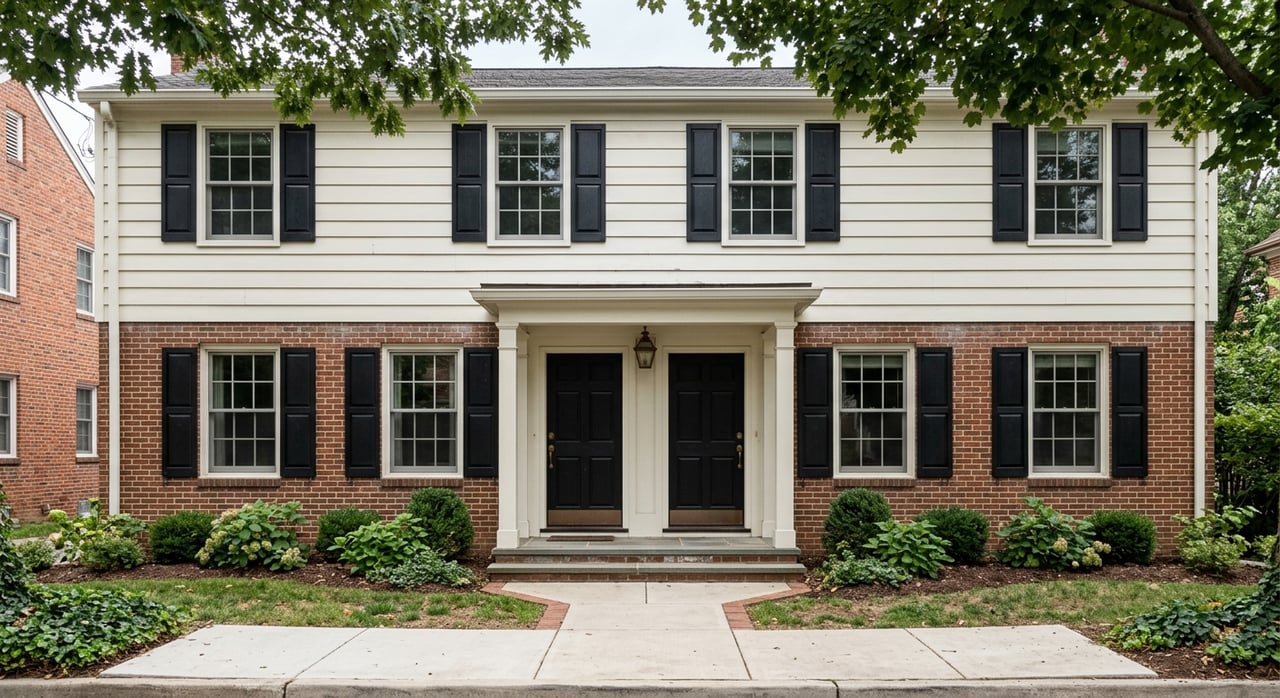
- Duplexes and quadraplexes
- Piggyback townhouses
That range matters because the property type can affect your cash flow, licensing steps, expenses, and future resale options. A condo may offer a lower entry price, for example, but HOA dues can change the monthly picture quickly.
In Prince George’s County, a single-family rental facility is defined as a building or related set of buildings with one or two dwelling units. If a property has two or more separate dwelling units, a use-and-occupancy permit is required. Some municipalities within the county also license rentals separately, so address-level verification is essential before you move forward.
Why 2 to 4 units matter
For owner-occupants and house hackers, small multifamily can be especially attractive. FHA financing is available for 1 to 4 unit properties and can require as little as 3.5% down. Fannie Mae also recognizes rental income from a borrower-occupied 2 to 4 unit principal residence when qualifying the loan.
That can create a practical entry path if you want to live in one unit and rent the others. In a higher-cost region like the DC corridor, that strategy can help offset your monthly payment while giving you a starting point for long-term investing.
The local rules you need to underwrite
In Maryland’s DC corridor, legal and regulatory details can change the economics of a deal. Before you spend too much time on cosmetic features or projected appreciation, make sure the property works from a compliance standpoint.
Start with licensing and use rules
In Montgomery County, a property must be licensed before it is rented or even advertised for rent. That is a major point for buyers to know up front. If you are evaluating a property there, confirming rental-license eligibility should be part of your earliest due diligence.
In Prince George’s County, rental licensing is also important, and inspection-based compliance is part of the process. Because local municipalities may add their own requirements, you should verify the exact address, permit status, and any municipal rules before assuming the property can operate the way you intend.
Check rent stabilization early
Rent stabilization can directly affect income growth. In Montgomery County, county-licensed rental units that are at least 23 years old are generally rent-stabilized unless exempt. The current rent-increase allowance is 5.7% through June 30, 2026, and the county requires 90 days’ written notice before a rent increase while also prohibiting mid-lease increases.
Prince George’s County also has a countywide framework under the Permanent Rent Stabilization and Protection Act of 2024. For most regulated units, the cap is the lesser of CPI-U plus 3% or 6%. The county lists exemptions that include units completed on or after January 1, 2000, ADUs, certain condos or co-ops, owner-occupied group homes, and landlords with five or fewer units who meet the exemption conditions.
These rules matter because they shape how quickly rent can rise over time. If your underwriting assumes fast rent resets to market, a stabilized property may perform differently than your spreadsheet suggests.
Know the statewide landlord-tenant basics
Maryland law sets several baseline rules that small rental buyers should understand. Security deposits are generally limited to one month’s rent. They must be held in a Maryland financial institution and returned within 45 days after the tenancy ends, with simple interest, subject to lawful deductions.
Maryland also requires written notice before a rent increase. For tenancies longer than one month, the notice period is 90 days. The state also requires the Maryland Tenants’ Bill of Rights to be attached to every residential lease, and that document is updated annually.
Application-fee rules are also worth noting if you plan to self-manage. The statutory fee limits mainly apply to landlords with five or more units, and the law does not apply to landlords with four or fewer units or to seasonal or condominium rentals.
Do not overlook lead compliance
If you are considering a pre-1978 rental property, lead rules are a major underwriting item in Maryland. These properties are subject to lead registration and risk-reduction requirements, including registration and renewed inspection or certification requirements tied to occupancy changes.
This is one of those details that can affect timing, cost, and operational planning. Older housing stock can offer opportunity, but you should budget for compliance instead of treating it as a surprise later.
Understand the tenant purchase right
If you plan to buy a rental property and eventually sell it, Maryland’s Right of First Refusal law should be on your radar. For sales of rental properties with three or fewer residential rental units, the current tenant gets the first opportunity to make an offer to purchase the property.
That does not prevent a sale, but it can affect your exit planning. For small investors, understanding the resale process at the beginning can help avoid surprises at the end.
A practical way to analyze a deal
A strong small-rental purchase usually starts with a disciplined checklist, not a gut feeling. In this corridor, that checklist should move from legal feasibility to income assumptions to downside testing.
Step 1: Confirm legal feasibility
Before anything else, verify:
- Rental licensing requirements
- Zoning or use-and-occupancy needs
- Rent-stabilization status
- Lead-registration status for older properties
- HOA or condo restrictions
If the property fails here, the deal may not be workable no matter how attractive the asking price looks.
Step 2: Underwrite income conservatively
Next, compare local asking rents with the purchase price, but stay conservative. Asking-rent data can be useful directionally, but it should not be treated as an exact lease comp. You should also leave room for vacancy, maintenance, insurance, and management costs.
This is where buyers often get tripped up. A property may look strong on a simple rent-to-price ratio, but soft assumptions on expenses can erase that advantage quickly.
Step 3: Test the downside
If the property falls within Montgomery County or Prince George’s County rent-stabilization scope, model the allowed increases instead of assuming unrestricted future growth. This is especially important if your monthly payment leaves little room for error.
A downside test can show whether the property still works if rent growth is slower than you hoped. That kind of discipline matters even more in a market where regulations vary by county and sometimes by municipality.
Step 4: Compare exit options
Finally, think about how the property may perform when you sell. A condo, townhouse, duplex, or small multifamily may each attract a different buyer pool. HOA dues, licensing requirements, and local rule complexity can also affect resale appeal.
That is one reason many buyers compare several formats at once instead of locking into a single property type too early. The best-performing property on paper today is not always the easiest one to operate or resell later.
What this means for Maryland investors
If your goal is stronger cash-flow potential, the current data suggest that Prince George’s County deserves close attention. Greenbelt, College Park, and Hyattsville appear especially worth screening based on present value-to-rent snapshots. Montgomery County may still offer opportunities, but buyers there should be especially careful about price pressure and rent-stabilization rules.
If you are an owner-occupant or first-time investor, 2 to 4 unit properties may offer one of the most practical entry points. Financing flexibility, paired with rental income from other units, can make house hacking more realistic in this region. The key is to pair the financing strategy with county-level due diligence from the start.
The best deals in Maryland’s DC corridor are rarely the ones that look easiest at first glance. They are usually the ones where you understand the local rules, underwrite conservatively, and choose a property type that fits both your budget and your long-term plan.
If you want help evaluating small rental opportunities across the DC metro, ONE Residential offers the local guidance, transaction support, and personalized service to help you move forward with confidence.
FAQs
What parts of Maryland’s DC corridor look more cash-flow friendly for small rentals?
- Based on the spring 2026 Zillow snapshots in this report, Prince George’s County generally looks more yield-friendly on a gross basis than Montgomery County, with Greenbelt, College Park, and Hyattsville standing out.
What property types can be rented in Montgomery County?
- Montgomery County’s rental licensing materials include single-family homes, condos, townhouses, duplexes, quadraplexes, and several other attached-home formats, but the property must be licensed before it is rented or advertised.
What should you verify before buying a rental in Prince George’s County?
- You should confirm rental licensing, whether a use-and-occupancy permit is required, inspection-based compliance, and whether the specific municipality has added rental rules for that address.
How does rent stabilization affect small rental properties in Maryland’s DC corridor?
- In both Montgomery County and Prince George’s County, some units are subject to rent caps or stabilization rules, which can limit how quickly rent may increase and should be built into your underwriting.
Can you house hack a small multifamily property in Maryland?
- Yes, FHA financing is available for 1 to 4 unit properties and can require as little as 3.5% down, and Fannie Mae recognizes rental income from a borrower-occupied 2 to 4 unit principal residence when qualifying the loan.
What Maryland rules matter most before renting out an older property?
- If the property was built before 1978, you should review Maryland lead-registration and risk-reduction requirements because registration, inspections, or certifications may be required as occupancy changes.